Open Roadmaps, Auditable Code, and Community Oversight: How Transparency Is Redefining Browser Trust
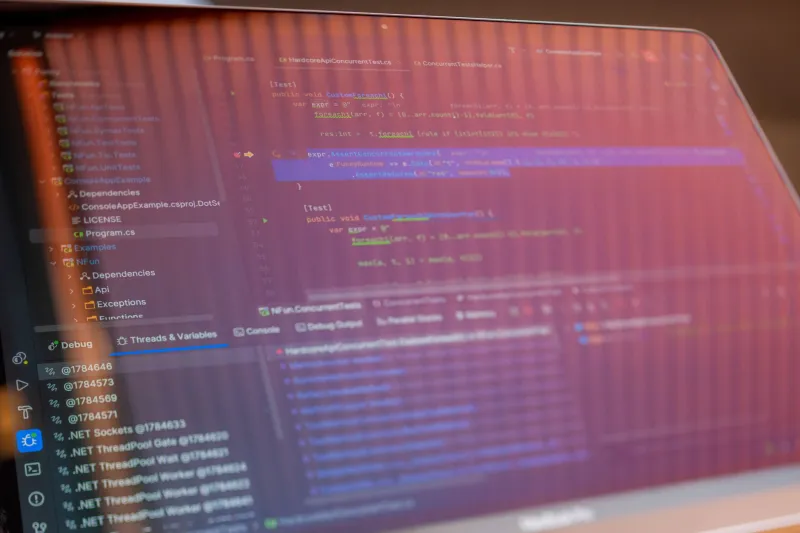
Trust is an unusual thing to extend to software. When you open a browser, you are handing a piece of code nearly unrestricted access to your network activity, your credentials, your location, and your browsing history. Yet most people do this without a second thought—largely because they have no practical means of verifying what that software actually does.
Proprietary browsers operate on a model of institutional faith. You trust the company behind the product because of its brand reputation, its privacy policy, or simply because it came pre-installed on your device. Open-source browsers offer something fundamentally different: not faith, but verifiability.
The Problem With Trusting a Black Box
When a major browser vendor releases an update, users receive a version number and, if they are fortunate, a changelog written for a general audience. What they do not receive is meaningful insight into the architectural decisions made, the security trade-offs accepted, or the data practices quietly introduced. Privacy policies are legal documents, not technical ones. They describe intent, not implementation.
This opacity is not necessarily the result of malicious design. Large organizations managing complex codebases face genuine constraints around communication and disclosure. But the effect on users is the same regardless of cause: they cannot independently verify the claims made about their own data.
The consequences of this information asymmetry have become increasingly visible. Revelations about undisclosed data collection features, telemetry enabled by default, and advertising partnerships baked into browser architecture have eroded public confidence in even well-regarded commercial products. Each incident reinforces the same uncomfortable question: what else is happening that has not yet been discovered?
What Transparent Development Actually Looks Like
Open-source browser projects operate under a different set of structural incentives. When source code is publicly accessible, every function call, every network request, and every data handling routine is subject to external review. This is not merely a philosophical commitment—it is an architectural reality.
At Arora, the development process is designed around visibility. Public repositories expose not just the current codebase but its entire history: who changed what, when, and why. Commit messages, pull request discussions, and issue threads create a living record of how the browser has evolved. A developer in Austin or a security researcher in Seattle can examine the same code that runs on millions of machines, without requiring any special access or institutional permission.
This extends to security audits as well. Rather than commissioning private reviews and selectively disclosing results, transparent projects publish audit findings in full—including vulnerabilities that were identified and subsequently patched. This practice may seem counterintuitive, but it serves a critical function: it demonstrates that the security process itself is functioning, not merely that the product has been declared safe by an interested party.
Real-Time Accountability and the Community Audit Model
One of the most significant practical advantages of open development is the speed at which potential issues can be identified and addressed. A single security researcher reviewing a proprietary codebase behind closed doors is a limited resource. A global community of developers reviewing the same public code simultaneously is something qualitatively different.
This distributed review model has demonstrated its value repeatedly in the open-source ecosystem. In several documented cases across various projects, community contributors identified privacy-relevant behaviors—undisclosed network calls, unexpected data persistence, overly broad permission requests—before those behaviors reached production users. The patch cycle in these cases was often faster than it would have been in a closed environment, precisely because the problem was visible to more people simultaneously.
The psychological dimension of this dynamic matters as well. Developers contributing to an open project know that their work will be reviewed. This awareness shapes behavior at the point of writing code, not just at the point of review. The expectation of scrutiny functions as a continuous quality mechanism, embedded in the development culture itself.
Decision-Making in the Open
Transparency in open-source browser development extends beyond code. Roadmap planning, feature prioritization, and architectural decisions are increasingly conducted through public forums, comment threads, and community votes. This means that users and developers can observe—and in many cases influence—the direction of the software they depend on.
This stands in sharp contrast to proprietary development, where product decisions are made in internal meetings and announced as finished facts. When a commercial browser adds a new feature with privacy implications, the user community typically learns about it at the moment of release. In an open development model, the discussion about whether and how to implement that feature happens publicly, often months in advance.
For privacy-conscious users, this is not a minor procedural distinction. It means that privacy considerations can be raised, debated, and incorporated before decisions are finalized—rather than being addressed reactively after the fact.
The Limits of Transparency and How to Address Them
It would be misleading to suggest that open-source development is a complete solution to the trust problem in browser software. Public code is only meaningful if people are capable of reading and evaluating it. The vast majority of users do not have the technical background to audit a browser codebase directly.
This limitation is real, but it does not undermine the model—it clarifies what the model actually provides. Open-source transparency creates the conditions under which trustworthy intermediaries can operate. Security researchers, academic institutions, independent auditing firms, and technically sophisticated community members can perform the verification that general users cannot. Their findings are then communicated in accessible formats, extending the benefit of transparency to a much broader audience.
The key distinction is structural. In a closed model, there is no mechanism by which outside parties could perform this function at all. In an open model, that mechanism exists by default.
Why This Matters Now
The regulatory environment around browser privacy is shifting. Legislation at both the federal and state level in the United States is increasingly focused on data collection practices, user consent, and the obligations of software companies toward their users. In this context, the ability to demonstrate compliance through auditable code—rather than through self-reported attestations—carries real significance.
For developers choosing which browser to build for, test against, or recommend to their organizations, the transparency of the underlying platform is a meaningful selection criterion. A browser whose behavior can be independently verified is a more reliable foundation for privacy-sensitive applications than one that requires institutional trust.
Open development is not a marketing position. It is a structural commitment that either exists or it does not. At Arora, that commitment is reflected in every public commit, every published audit, and every open discussion thread—because trust, in the end, is something that has to be earned in public.